A national commercial HVACR contractor operating across all major U.S. markets, with $100M–$400M in annual revenue and a field workforce supporting:
Their daily operations rely heavily on cranes, aerial equipment, jobsite deliveries, precise sequencing, and regional supplier coordination - often across hundreds of locations per week.

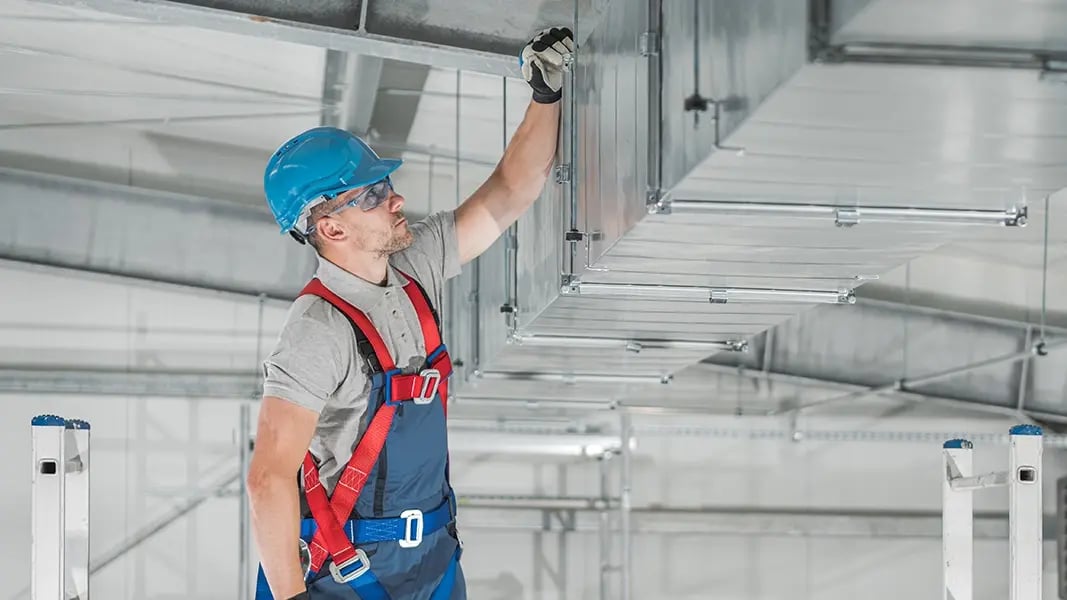
Even with national agreements and disciplined procurement, HVAC teams still lose control when technicians, project managers, crane operators, equipment suppliers, and finance coordinate outside a single execution workflow.
Despite contracted rates with crane operators and national equipment suppliers, actual ordering behavior varied by region, technician, project manager, timing, and urgency level.
This inconsistency produced:
This was one of their biggest operational headaches.
Because cranes and aerial equipment came from different suppliers, they struggled to ensure:
Field teams had no centralized place to confirm:
This created unnecessary delays, idle time, reorders, extra rental days, and cost overruns.
Their project documentation - BOMs, equipment lists, install diagrams, submittals - lived in email, shared folders, PDFs, and project management systems with no operational tie-in.
None of it was connected to the actual rental assets, crane workflows, supplier activity, or jobsite execution record.
This created:
Leadership lacked a consolidated view of:
Procurement had data.
Finance had data.
Operations had data.
None of it was connected to one controlled execution workflow.
SiteStack delivered a jobsite procurement execution system that connected suppliers, crane operators, project documentation, rental lifecycle, and multi-site execution in one controlled workflow.
SiteStack scored and recommended suppliers by:
This removed field-level guesswork and reduced non-compliant purchases.
For the first time, the contractor could see:
SiteStack allowed the team to stage and sequence crane and equipment workflows together, reducing misfires, reorders, idle time, and unnecessary extra days on rent.
SiteStack enabled the contractor to upload:
Once attached, materials and documentation became part of the job’s operational workflow, connected to equipment, crane sequencing, supplier activity, and cost tracking.
This unified materials + equipment + crane sequencing in a way no other system does.
When preferred suppliers lacked availability or local coverage, SiteStack surfaced alternate supply points across 14,000+ locations nationwide, helping teams maintain consistency on remote or rural jobsites without building new vendor relationships from scratch..
Leadership gained a consolidated view of:
This turned reactive coordination into proactive control.
Driven by:
Reduced idle time
Fewer unnecessary extra days on rent
Every install crew followed the same workflow regardless of location, manager, or urgency.
Project teams, procurement, operations, and finance worked from the same jobsite execution record.
See how SiteStack can help your team control supplier selection, crane coordination, equipment rentals, delivery workflows, call-offs, and invoice accuracy across every jobsite.
