A national demolition and environmental services contractor generating approximately $100M in annual revenue, operating across:
They manage the equipment, waste, hauling, and jobsite logistics required to dismantle, remove, and clear complex sites, including:
Their annual equipment and logistics spend ranged from $3M–$5M.
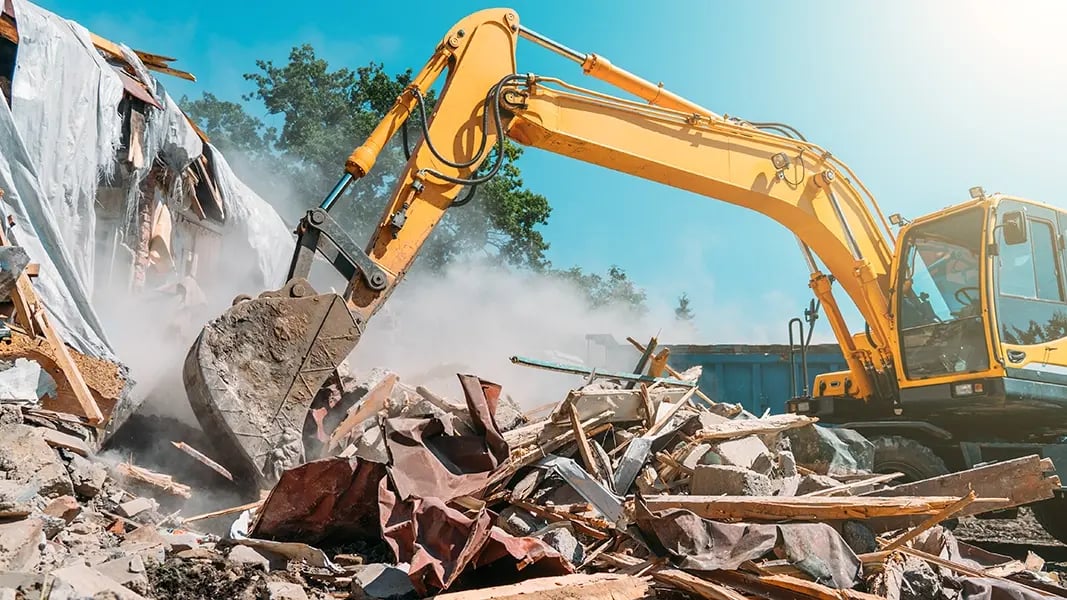

Demolition projects are operationally dense: multiple asset types, multiple vendors, tight timelines, hauling requirements, environmental constraints, and high safety standards.
Even with experienced superintendents and equipment coordinators, the company faced four recurring execution problems.
During discovery, leadership acknowledged a painful reality: equipment was occasionally still on rent and no one realized it.
Rentals were being tracked through:
There was no real-time internal system confirming:
Idle assets quietly cost the company money.
Superintendents frequently needed to request additional equipment mid-project.
However:
Leadership wanted to create a structured workflow where:
The goal was speed for the field without losing control. SiteStack enabled that structure.
The VP of Construction and program leadership recognized a larger opportunity: estimating, procurement, field execution, and finance needed to work from the same jobsite record.
They needed a tool where:
Previously, estimating lived in one system, rentals in another, and invoices in another.
There was no unified operational thread.
SiteStack allowed them to:
This contractor owned:
Yet those assets were managed outside of rental visibility.
They wanted a single jobsite view that included:
SiteStack allowed them to embed internal and external assets into one unified jobsite record.
SiteStack became the procurement execution control layer for the organization — connecting estimating, supplier selection, approvals, jobsite execution, on-rent visibility, and finance.
Every demolition project could be:
Inside SiteStack before equipment hit the jobsite.
Leadership could forecast:
And pass that plan into execution seamlessly.
Superintendents could request additional assets and submit adjustments, while booking authority remained centralized.
This preserved field flexibility while reducing uncontrolled spend.
For the first time, the company could see:
They no longer had to rely on supplier reports weeks later to understand exposure.
SiteStack allowed them to:
This created a jobsite control layer across internal assets and external suppliers.
Driven by:
Estimator, project manager, superintendent, procurement, and finance teams worked from one workflow and one jobsite record.
Leadership no longer relied on supplier reports to understand rental exposure. They owned the jobsite procurement data in real time.
See how SiteStack helps teams control equipment, dumpsters, hauling, approvals, on-rent visibility, and invoice accuracy across complex jobsites.
